Kindergarten
Starting school is a big step for children and families. Our school runs orientation and transition activities to help your child feel ready for Kindergarten and to support you as parents and carers.
Read the Getting ready for primary school guide for detailed tips and checklists.
Enrolment Process

Enrol online
Visit the school
Enrolment interview
Before your child begins, all families meet with one of our executive staff. This is a time to share:
- medical conditions or allergies
- learning support needs
- family circumstances that may affect your child’s start
We want every child to feel safe, supported and included in school life.
Kindergarten transition
Once enrolment is complete, your child will be invited to attend transition sessions at school. Our Creative Critters transition sessions help children:
- meet teachers and classmates
- explore classrooms and playgrounds
- practise simple routines
Kinder Fair and Teddy Bears Picnic
Kindergarten Transition
Creative Critters is a program that is designed to prepare children for Kindergarten. This program assists students to develop their skills in the areas of literacy and numeracy, personal and social capabilities and listening abilities, whilst familiarising them to the local school environment.
Creative Critters aims to:
- help develop positive attitudes in the children towards coming to school
- enable children to feel comfortable and familiar in the school environment
- foster partnerships between the school and families.
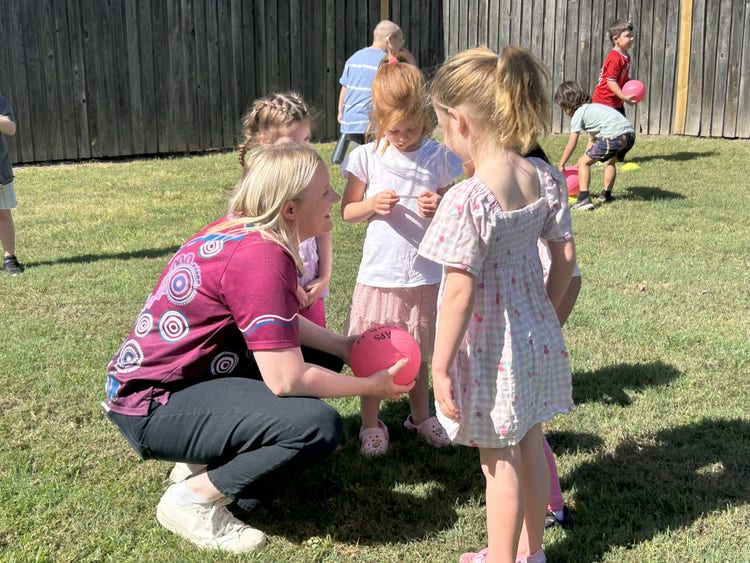
Creative Critters includes a range of activities including:
- Individual and whole group activities
- Indoor and outdoor activities
- Interactive learning centres and structured play
- During the morning children will enjoy fruit break
Each week your child will be required to bring along:
- Hat
- Water bottle
- Fruit break - please label containers if using
- Change of clothes
We request that all parents/carers stay onsite
during Creative Critters. There are seats
available in the courtyard near the front gate.
What to expect in Kindergarten
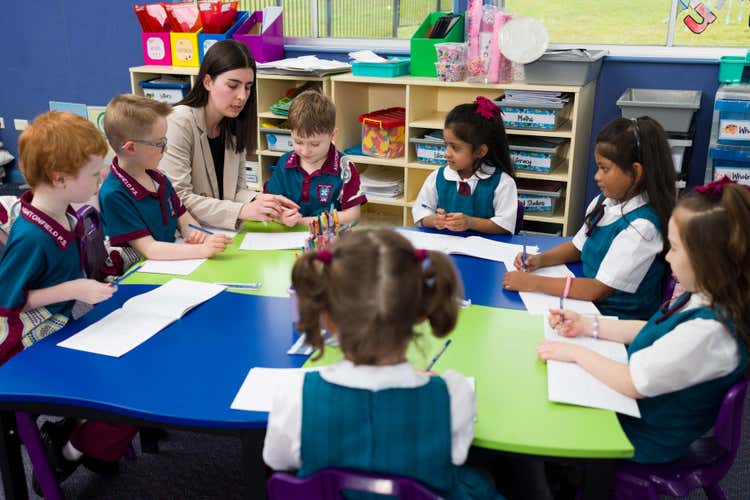
Learning and development
Kindergarten follows the NSW curriculum. Children build early skills in literacy, numeracy, creative arts, health and physical activity, science and technology. Learning through play also supports social, emotional and academic growth.

Daily routines
Children learn routines such as morning arrival, snack and lunch breaks, lining up, using bubblers and moving safely around the school. Teachers guide children as they settle in, but practising at home helps.

Best Start Assessment
At the start of the year, all Kindergarten children take part in the Best Start Assessment. This is a friendly, one-on-one activity where teachers learn about your child’s literacy and numeracy skills. It is not a test and needs no preparation.
"During our first year attending Ashtonfield Public School, the Kindergarten teachers and support staff have been supportive and friendly. My daughter has thrived and has grown so much in her first year of schooling, and I attribute this directly to her incredible teacher and the positive learning environment that the school provides. The school provides opportunities for parents to be involved in their children's daily learning by having open classrooms, and it's honestly incredible to see the teachers and students in their element. Overall, we could not be happier with our decision to choose Ashtonfield Public School for our family."
Melissa Neave, parent of Ashtonfield Public School
Getting ready at home
- Initiate and sustain a conversation with adults and other children.
- Speak clearly and audibly and maintain eye contact.
- Speak without shouting or whispering.
- Understand requests and seek clarification.
- Carry out three directions in sequence.
- Talk reciprocally with peers and take part in conversation.
- Listen attentively and answer questions in a group situation.
- Recognise own first name.
- Hold a pencil in an appropriate grip.
- Draw recognisable pictures of people.
- Complete puzzles.
- Use scissors.
- Name primary and secondary colours.
- Attempt to solve problems independently.
- Describe concepts e.g big/small, more/less, same/different.
- Concentrate on a story being told in a group setting.
- Move about confidently at preschool.
- Manage changes in the environment independently, e.g stairs,
- obstacles, uneven ground.
- Understand spatial concepts, e.g up/down, left/right.
- Catch and throw a ball with a partner.
- Kick a ball.
- Play actively with friends.
- Understand the need for safety, e.g roads, heights.
For more advice, see the Getting ready for primary school guide.